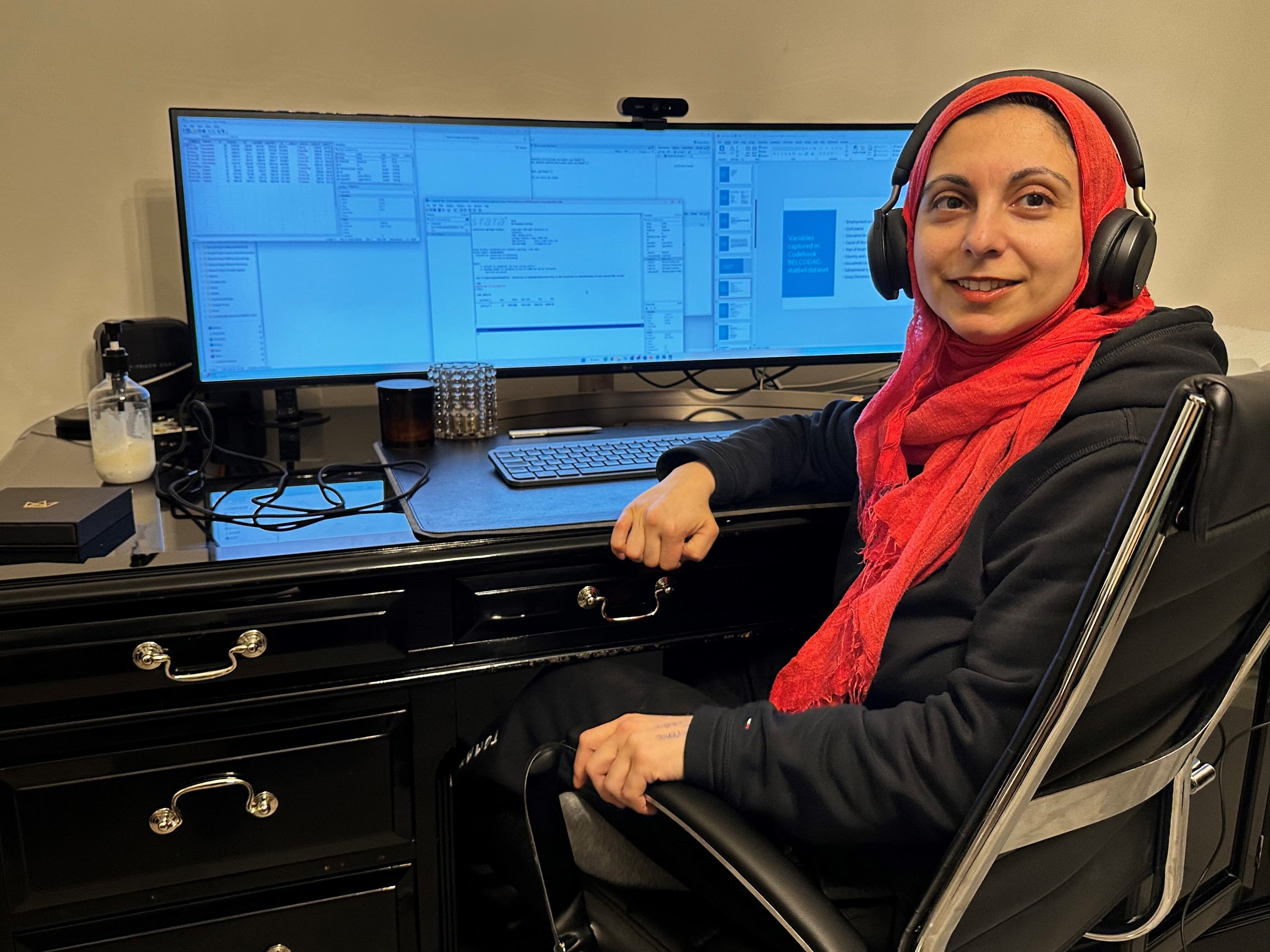
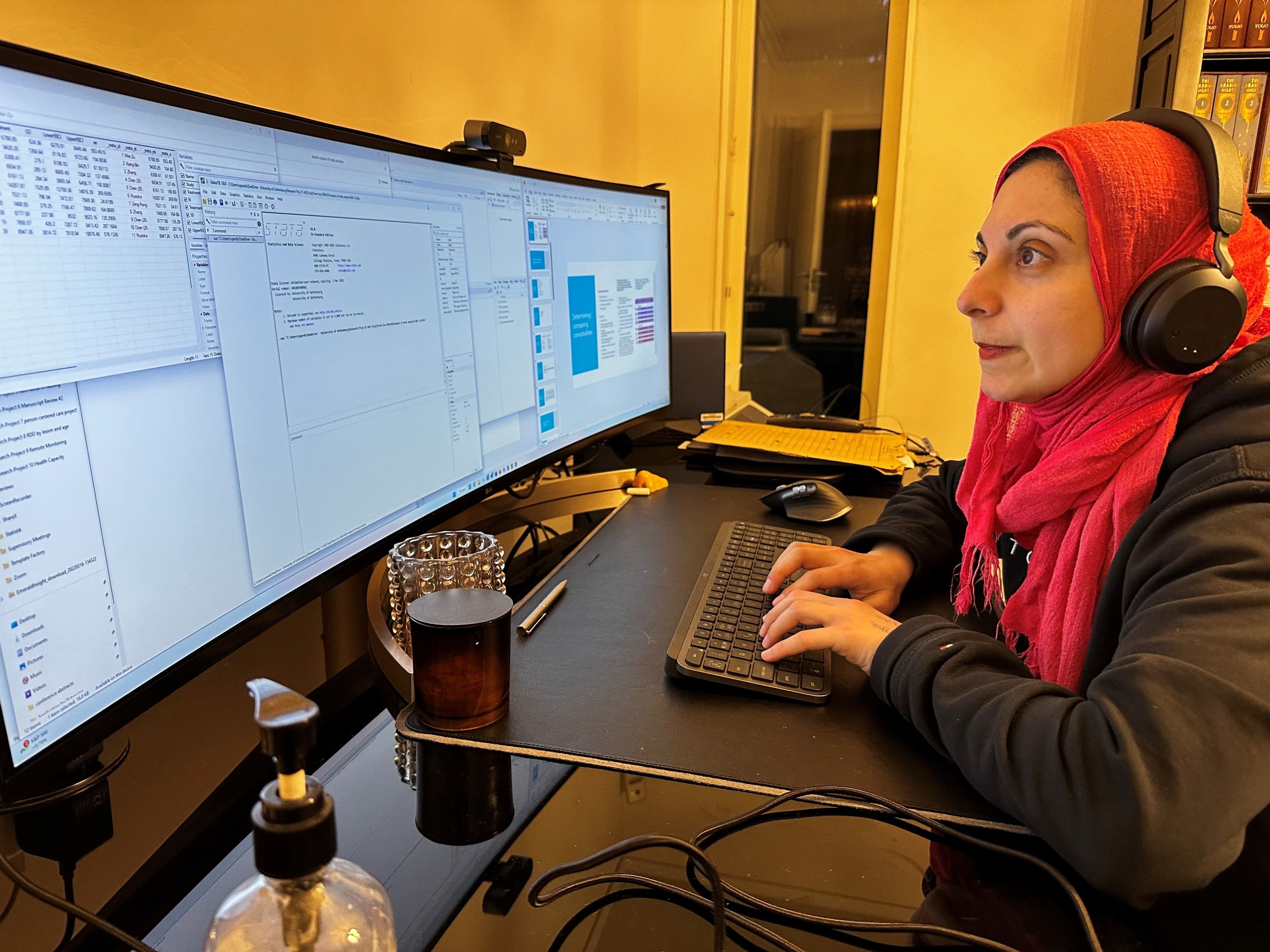
Salma Pardhan navigates a dual PhD between Sweden and Belgium, investigating long-term healthcare sustainability for congenital heart disease. Her global approach merges economics and medicine for impactful, cost-effective patient care.
Salma Pardhan is a PhD student at both the Institute of Health and Care Sciences, University of Gothenburg, Sweden, and the Institute of Biomedicine, KU Leuven, Belgium. She started her academic career in Canada, where she obtained a Master’s degree in the area of Economics at Queen’s University in Kingston, Ontario, Canada. For several years she also worked as a Senior Policy and Economic analyst within different government departments in Canada. Today, she lives in Gothenburg with her family, and has obtained a second Master’s degree in the area of Public Health and Health Economics from Gothenburg University.
– My research is quite unique as I am working directly towards a double degree in Belgium and Sweden, studying two different kinds of health care systems. My PhD project focuses on sustainability of care for patients with congenital heart disease, with the aim to identify risk factors and challenges in providing long-term healthcare to this population. Exploring healthcare use under different financing systems and working with national registries in both Belgium and Sweden will provide meaningful analysis with global relevance, says Salma Pardhan.
The obligations that follow obtaining a double PhD degree, and the importance of being on site in Belgium to access the Belgian registry, involves a lot of travelling to the KU Leuven University.
– We have created our own team of knowledge and expertise involving researchers from both universities, which I believe will be extremely beneficial for future collaborations, says Salma Pardhan.
The grant from The PK Hedborg foundation is an important addition to the project and will be used for travel expenses in connection with the research work at KU Leuven.
– Economics is everywhere in the healthcare field and involves a wide scope of analysis such as cost effectiveness, trend analysis, and economic modelling. The ultimate goal in the research area I am working in is to develop a globally relevant, evidence-based algorithm that supports clinicians, administrators and policymakers in making informed decisions about patient care allocation, ensuring the best possible outcomes at the lowest cost.